
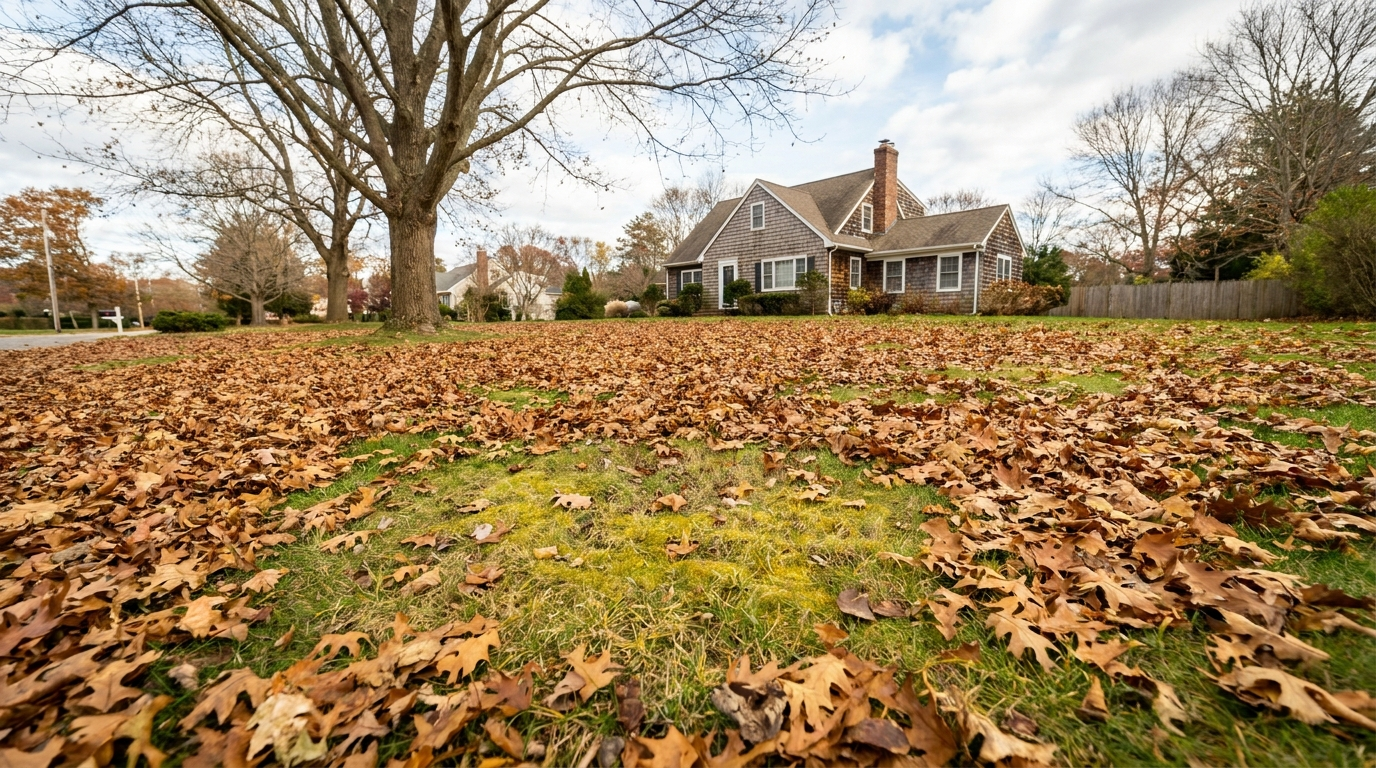
A lawn rarely fails in the fall. It fails in the dark, weeks later, under a blanket of damp leaves that nobody raked. By the time the snow melts and the damage shows, the window to prevent it closed months earlier. For homeowners, fall cleanup Long Island style is not a cosmetic chore. It is the cheapest insurance a South Shore property can buy. This article explains the mechanics of what goes wrong when leaves and debris stay put, when the damage occurs, and how to judge whether your yard is at risk.
What Actually Happens to a Lawn Buried in Leaves All Winter?
Leaves left in a thick layer block light and air, trap moisture against the grass, and create the conditions for fungal disease and rodent damage. The result is thin, matted, patchy turf in spring. The grass is not dead from cold. It is smothered and stressed.
Smothering and lost food production
Grass keeps photosynthesizing in cool fall weather, building the energy reserves that carry it through winter. Gardening Know How explains that after a couple of rains, leaves pack into a wet mat that cuts off light and air. A lawn under that mat enters winter hungry and weak.
Snow mold and its cousins
Snow mold is a fungal disease that develops in cold, wet conditions. Extension-based reporting from Wisconsin Ag Connection notes it often becomes noticeable in early spring as matted, crusty patches. That same coverage describes research comparing two-inch and four-inch leaf layers. A four-inch layer was much more likely to cause damage, while a thinner layer of shredded leaves was far less risky.
Long Island gets less prolonged snow cover than Vermont or Minnesota, which is why local lawns often escape the worst snow mold. But the South Shore has its own version of the problem. Coastal humidity, frequent winter rain, and freeze-thaw cycles keep leaf mats soaked for weeks, so the smothering and disease pressure still build. Many homeowners assume mild winters make cleanup optional. Operators often see the opposite: wet, not frozen, is what ruins turf here.
Shelter for pests
A leaf blanket is also an inviting hideout. Industry guidance on skipped cleanups lists matted grass, snow mold, and vole damage as the typical outcome by spring. Voles tunnel under the cover and leave winding trails through the turf once it clears.
What this means for you: The damage is invisible until spring, so a lawn that looks fine in December can still be in trouble. Judge by leaf depth, not by how the grass looks today.
When Does the Damage Happen? A Fall-to-Spring Timeline
Most skipping fall cleanup lawn damage follows a predictable sequence. It starts quietly in November and shows itself in March or April. Knowing the sequence helps you see why a late intervention can only repair damage rather than prevent it.
| Period | What Is Happening Under the Leaves | Can You Still Fix It? |
|---|---|---|
| Late October to mid-November | Leaves are still falling and drying out. Light is blocked, but the layer is loose. | ✅ Easily. Dry leaves rake or blow fast. |
| Late November to December | Rain and early frost compress the layer into a wet mat. Grass stops storing energy. | ⚠️ Yes, but heavier and slower. |
| January to February | Fungal activity and rodent tunneling continue unseen. Turf crowns sit in saturated debris. | ⚠️ Only on thaw days, and frozen ground limits work. |
| March to April | Mat is lifted to reveal matted, yellow, or dead patches and vole trails. | ❌ Prevention is over. Repair means raking, reseeding, and waiting. |
Timing matters on the South Shore for another reason. Leaves begin dropping in Suffolk County by late September and continue until mid-November, according to a local fall deadline guide. That means a single visit rarely catches everything. Oaks, in particular, tend to hold leaves late, so one early raking can be buried again two weeks later.
What this means for you: Aim for the cleanup that follows the last major leaf drop, with lighter passes during peak fall. A cleanup done before your biggest trees are bare is only half a job.
Why Does a Skipped Cleanup Cost More in Spring?
Spring work on a neglected lawn is slower, heavier, and often needs repair on top of cleanup. Wet, decomposed leaf mats weigh far more than dry fall leaves, and the turf beneath often needs raking, overseeding, and extra weed control. The savings from skipping the fall visit rarely survive the spring bill.
The compounding cost stack
Industry observers describe the same pattern in cold-climate markets. One Vermont service provider puts it bluntly: skip one fall visit and you buy three in spring. That is one company's rule of thumb, not a Long Island figure, but the logic transfers. Spring crews face wet debris, compromised turf, and a schedule already crowded with mulching, pruning, and mowing starts.
The costs tend to stack in this order:
- Heavier labor: Removing a soggy mat takes longer than clearing dry leaves.
- Turf repair: Dead patches need raking, topsoil or compost, seed, and watering.
- Weed pressure: Thin turf gives weeds open ground to colonize, especially crabgrass in summer.
- Gutter and drainage cleanup: Debris in gutters and storm drains can cause overflow or water damage near the foundation.
The reseeding trap on Long Island
Here is the unexpected part. Patching in spring is a weaker fix than patching in fall. The Suffolk County Healthy Lawns program says the best seeding period on Long Island runs from late August to late September, when temperatures cool and soil stays warm and moist. Spring seedlings face summer heat and crabgrass competition before roots mature.
There is also a fertilizer deadline to respect. Local guidance notes that Suffolk County restricts lawn fertilizer from November 1 through April 1. A neglected lawn cannot be fed into recovery during that window, so waiting costs you time as well as money.
What this means for you: The real cost of skipping is not the cleanup you avoided. It is the repair, reseed, and lost growing season you take on in return.
How Bad Is Your Yard? A Simple Leaf Load Scoring Model
Not every property carries the same risk. A treeless corner lot and a wooded East Islip yard with mature oaks are different problems. This quick scoring model helps you decide whether a single mulching pass is enough or whether you need full removal.
Score each factor from 0 to 2
| Factor | 0 Points | 1 Point | 2 Points |
|---|---|---|---|
| Leaf depth after mowing | Grass clearly visible | Patchy cover | Grass mostly hidden |
| Leaf condition | Dry and loose | Damp | Wet and matted |
| Shade and drainage | Sunny, drains well | Partial shade | Heavy shade or low spots |
| Past problems | None | Occasional thin spots | Repeat patches or vole trails |
0–2 points: Mulch the leaves into the lawn with a sharp mower. 3–5 points: Mulch lightly, then remove the excess from the shadiest areas. 6–8 points: Schedule full removal, and do not rely on mowing alone.
The mulching rule of thumb
Mulching is a legitimate option, not a shortcut. Cornell turf guidance says lawn health is not compromised when leaves are chopped finely enough to slip between grass blades. A common benchmark is to stop mulching and start removing once less than about half the lawn surface remains visible. Wet leaves are the exception. Running a mower over a soggy mat only smears it.
What this means for you: Beds are a different story. Leaves in planting beds can stay as natural mulch, but turf is where thick layers do harm.
Frequently Asked Questions About Fall Yard Care on the South Shore
When should I schedule fall cleanup on Long Island?
Plan on a cleanup after most trees are bare, typically mid-to-late November, with lighter passes earlier if your yard has heavy leaf drop. Booking in advance matters, since crews fill quickly once leaves fall. Companies offering South Shore fall lawn care often work through a tight window.
Can I just mow the leaves instead of raking?
Yes, if the layer is light and dry. Mow until leaves are dime-sized and grass is still visible. If the pile is deeper than the mower can chop, rake or blow it off.
Is snow mold permanent?
Usually not. Most snow mold damage is cosmetic, and grass typically recovers after a gentle spring raking lets the blades dry and stand back up. Severely smothered areas may need reseeding.
Does fall cleanup include more than leaves?
A thorough East Islip fall landscaping visit typically also covers clearing debris from beds, cutting back spent perennials, and tidying edges before winter.
Key Takeaways for Your Long Island Autumn Lawn
The Long Island autumn lawn faces a specific risk: wet leaf mats, not deep snow. Fixing it takes a fraction of the effort that spring repair requires. Use these points as your checklist.
- Thick, wet leaf layers smother turf. They block light and air, hold moisture, and invite fungal disease and rodents.
- The damage is hidden until spring. A lawn that looks fine in December can emerge matted and patchy by April.
- Thin, shredded layers are fine. Mulching dry leaves into the lawn can feed the soil. Deep, whole, or wet layers need removal.
- Timing is the lever. Wait for the last major leaf drop, but do not let leaves sit through weeks of rain.
- Spring repair costs more. Wet debris, reseeding, and weed control add up, and spring seed is a weaker fix than fall seed.
- Use the Leaf Load Score. Rate depth, condition, shade, and history to decide between mulching and full removal.
If your property has mature trees or a history of spring patches, a local crew that knows South Shore soil and weather can handle fall cleanup Long Island homeowners rely on. Landscapes by R. Wieland has served East Islip since 1980 and offers seasonal cleanups, so booking before the leaf drop peaks is a practical next step.