
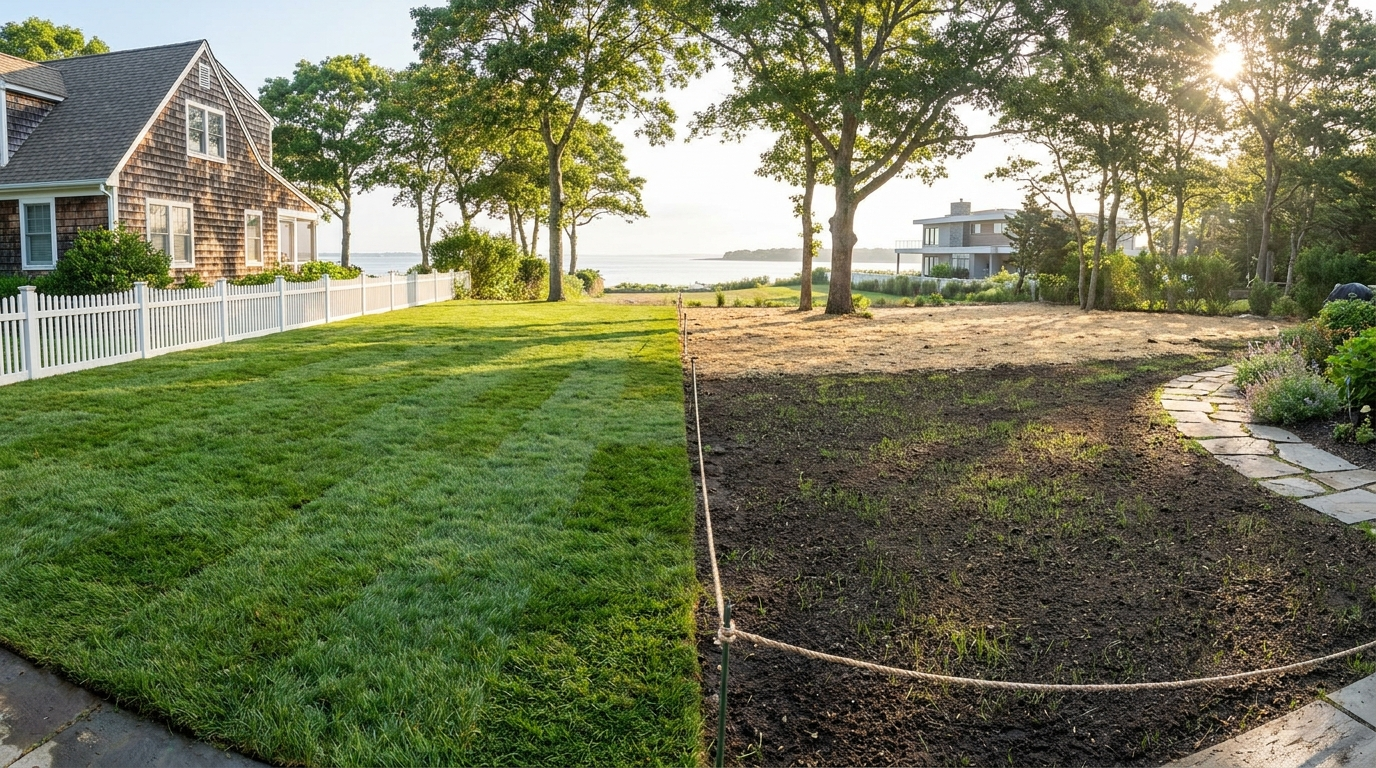
Picture two neighbors on the same East Islip block, both staring at the same sun-scorched, crabgrass-riddled lawn after a brutal Long Island summer. One calls a landscaper and orders sod. The other buys a few bags of seed and gets to work. A season later, one has a dense, even lawn that the kids are already playing on. The other is still waiting, watering, and wondering what went wrong. The frustrating truth? Both decisions can be right or wrong depending on factors that have nothing to do with the grass itself and everything to do with South Shore soil, timing, and what the homeowner actually needs. This comparison cuts through the noise and gives you an honest, local-specific answer.
Why South Shore Soil Changes Everything About This Decision
Before comparing costs or timelines, it pays to understand what you are actually working with underfoot. The soil beneath your East Islip or South Shore lawn is not typical garden-variety dirt, and that distinction shapes every lawn installation decision you make.
Long Island's geology creates two very distinct soil worlds: the sandy, well-drained profiles of the South Shore, deposited by glacial outwash plains, and the heavier clay-loam of the North Shore and mid-island areas, left by glacial till. For South Shore homeowners specifically, that means you are working with soil that is fast-draining, low in organic matter, and prone to nutrient leaching.
The soils here, particularly on the South Shore and across the eastern stretches of Long Island, tend to be sandy and fast-draining, which means fertilizer doesn't hold the way it does in heavier inland soils. The maritime climate brings humidity, salt air, and the occasional nor'easter that can leave your yard looking like a construction site overnight.
This creates a compounding problem for seeding. On Long Island's sandy, nutrient-depleted soil, seed doesn't perform the way it does in richer growing conditions. Broadcasting seed over unprepared ground here produces germination rates of only 25 to 35 percent. That means most of what you put down doesn't grow, and you're back at it again next season, spending more money, more time, and still waiting on results.
Sod, by contrast, arrives with an established root mat that grips the sandy substrate more reliably from day one. Sandy soils drain quickly, hold less water, retain fewer nutrients, and warm faster in spring , which means sod's pre-grown root system has a structural head start that bare seed simply cannot replicate in the same window.
Sandy South Shore soils tend to be slightly acidic, with pH running between 5.5 and 6.5, while most lawn grasses prefer pH 6.0 to 7.0. A soil test and pH amendment are non-negotiable for either method. Skipping that step is the single most common reason local lawn projects fail, regardless of whether sod or seed goes down.
Sod Installation: What South Shore Homeowners Should Expect
Sod is the higher-investment, lower-risk option for Long Island's South Shore. It delivers predictable results on a compressed timeline, which is exactly why it suits homeowners who want a usable lawn this season, not next year.
Cost and Installation Timeline
Professionally installed sod runs roughly $1.20 to $2.85 per square foot, which puts the average project around $2,000. For a typical South Shore residential lot with 2,000–3,000 square feet of lawn area, expect total project costs to range from $2,400 to $8,500 depending on soil prep requirements, grading work, and the sod variety selected.
Most projects move faster than homeowners expect once preparation begins. For an average residential property, sod installation itself can often be completed in one day. After installation, it takes about two to three weeks for the sod to fully establish, meaning you still need to wait a short period before it can handle normal foot traffic.
Timing Windows on Long Island
For Long Island homeowners, the best windows for sod installation are spring (April to early June) and fall (early September through October). These seasons offer mild temperatures, frequent rain, and fewer weeds competing for nutrients.
Fall offers even better conditions in many ways. The soil is still warm from summer, but the air is cooler, which reduces stress on the grass. Fall installations often require less watering and experience fewer pest problems. The roots continue to grow until the ground freezes, giving sod a strong head start for the next spring.
Grass Variety Considerations for Sod
Kentucky Bluegrass suits properties with irrigation; Black Beauty tall fescue, RTF, or bluegrass-fescue blends work for properties without full irrigation. For South Shore properties near the water, fine fescue blends with high slender creeping red fescue content offer the highest salt tolerance available among cool-season grasses. Zoysia is worth considering for sunny South Shore yards: its heat tolerance, drought tolerance, sandy-soil performance, and low-input characteristics align well with Long Island conditions.
Grass Seeding on Long Island: The Real Story
Grass seeding on Long Island is genuinely cost-effective when conditions are right and expectations are calibrated honestly. The problem is that many homeowners underestimate what "right conditions" actually requires here.
Cost and What It Actually Includes
Grass seed might cost as little as $80 in materials for a 1,000-square-foot area, with full professional seeding projects typically ranging from $450 to $1,700. That figure is compelling until you factor in the hidden costs. Many homeowners attempt seeding once, get poor results, try again the following fall, and by the time they factor in two or three rounds of seed, soil prep, weed control, and water bills, they've spent close to what a professional sod installation would have cost, with nothing to show for the first year or two.
The Optimal Seeding Window
Timing is where seeding success or failure is decided on Long Island. According to Suffolk County's healthy lawns guidance, the best period to seed on Long Island is late summer (late August) until early fall (late September), when temperatures start to cool and soils are still warm and moist.
The advantages of fall installation are compelling. Fall gives you warm soil for germination, cool air for seedling growth, and reduced weed competition. Spring seeding is a distant second choice because seedlings have to survive their first summer immediately, and pre-emergent herbicide conflicts with new seed.
Spring seeding carries additional complications. Waiting too long to seed your lawn, particularly into late spring or early summer, creates a different set of challenges. As temperatures rise, native weeds become more active and can quickly overtake your newly sown grass, competing for water, nutrients, and sunlight.
Choosing the Right Species for Long Island Lawn Installation
Species selection matters more here than almost anywhere else in the Northeast. For lower-maintenance yards or sandy soils that drain fast, Turf-Type Tall Fescue is an excellent standalone choice that handles drought, shade, and Long Island's sandy outwash soils better than any other species. For a premium lawn with irrigation, for most Long Island lawns in USDA Zone 7B, the best grass types are a blend of Kentucky Bluegrass (60 to 70%), Perennial Ryegrass (15 to 20%), and Fine Fescue (15 to 20%). A trusted local resource for species-specific guidance is the Long Island grass seed selection guide from Lawn Love, which breaks down each variety by soil type and sun exposure.
Head-to-Head Comparison: Sod vs. Seeding for South Shore Properties
The table below consolidates the most decision-relevant factors for Long Island homeowners. Every figure reflects regional conditions, not national averages.
| Factor | Sod Installation | Grass Seeding |
|---|---|---|
| Typical Cost (Pro Installed) | $1.20–$2.85/sq ft | $0.45–$1.70/sq ft (all-in) |
| Time to Usable Lawn | 2–3 weeks | 3–6 months (full coverage) |
| Sandy Soil Performance | ✅ Strong, pre-grown root mat anchors quickly | ⚠️ Variable, germination rates drop without soil amendment |
| Best Installation Window | April–June or Sept–Oct | Late Aug–Late Sept (fall is strongly preferred) |
| Weed Competition Risk | ✅ Low, dense coverage suppresses weeds | ❌ High, bare soil invites crabgrass and broadleaf weeds |
| Salt Tolerance (Coastal) | ✅ Fine fescue sod blends available | ✅ Fine fescue seed blends available |
| Erosion Control | ✅ Immediate ground coverage | ❌ Prone to washout before establishment |
| Grass Variety Flexibility | ⚠️ Limited to what's available from sod farms | ✅ Full range of species and blends |
| Ideal Project Type | Full lawn replacement, new construction, high-visibility areas | Large areas, budget projects, fall overseeding |
The Decision Framework: Which Option Fits Your Situation
The honest answer is that neither sod nor seeding is universally superior for South Shore Long Island properties. The right choice depends on a combination of timeline, budget, site conditions, and how the lawn will be used. Here is how to think through it.
Choose sod installation if: you need a usable lawn within weeks, you have children or pets who cannot stay off the grass for months, your property has a slope where seed would wash away before germinating, or you are preparing the home for sale and need immediate curb appeal. Sod is also the stronger choice for any South Shore property that has struggled with repeated seeding failures, which is a common pattern on the sandiest soils in communities like East Islip, Bay Shore, and Islip Terrace.
Choose grass seeding if: your project covers a large area (5,000 square feet or more) where the cost difference becomes significant, you are seeding in the late August to late September window, your soil has already been properly amended and graded, and you can commit to consistent watering and weed management for a full growing season. Seeding also makes sense for overseeding thin areas within an otherwise healthy lawn, where the existing turf provides some protection against washout and weed encroachment.
The scenario that almost always favors sod: a full lawn replacement on a typical South Shore residential lot of 1,500–3,000 square feet. At that scale, the cost premium for sod is manageable, the timeline advantage is dramatic, and the risk of seed failure on sandy soil is real enough to make the upfront investment worthwhile. As this Suffolk County lawn cost breakdown notes, when you account for repeated seeding attempts, weed control, and water bills, the true cost gap between sod and seed often narrows considerably.
One factor that often gets overlooked: soil preparation costs are nearly identical for both methods. Both sod and seed require the same essential first step. Before anything goes in the ground, the soil needs to be cleared of debris, tilled to at least six inches, graded properly, and amended for pH and nutrients. That baseline cost does not disappear just because you chose the cheaper material.
Frequently Asked Questions
How long before I can walk on new sod or seeded grass on Long Island?
Sod delivers an instant lawn that is ready in 2–3 weeks, while seeded lawns cannot handle foot traffic for months. For sod, the general rule is to stay off it until you cannot pull a corner up easily, which typically takes 2–3 weeks in spring or fall conditions.
Is fall really better than spring for new lawn installation on Long Island?
For seeding, fall is significantly better. Fall emerges as the superior choice for new lawn installation on Long Island. September is ideal because new grass gets 6 to 8 weeks of growth before the first hard freeze around November 4. For sod, both spring and fall work well, though fall installations tend to require less irrigation and face lower disease pressure.
What grass type works best on South Shore sandy soil?
Turf-type tall fescue is one of the most popular grasses for Long Island due to its adaptability and resilience. This grass can thrive in various soil conditions, including the sandy soils common in Long Island's coastal areas. For properties near the water, fine fescue blends add salt tolerance that tall fescue alone does not provide.
Can I seed over an existing lawn instead of starting from scratch?
Overseeding a thin but living lawn is a cost-effective middle ground. It works best in the late August to late September window with proper aeration beforehand. It is not a substitute for full renovation if more than 50% of the lawn is bare, weedy, or dead, in which case a full soil prep and either sod or seeding from scratch will produce better long-term results.
Does Landscapes by R. Wieland offer both sod and seeding services?
Yes. With over 45 years serving East Islip and the surrounding South Shore communities, the team evaluates each property individually before recommending an approach. Soil condition, project timeline, budget, and intended use all factor into that recommendation, and no two properties on the South Shore are exactly alike.
Key Takeaways for South Shore Lawn Installation
- South Shore sandy soil is the defining variable. It reduces seed germination rates, drains nutrients quickly, and makes soil preparation non-negotiable for either method.
- Sod costs more upfront but delivers faster, more predictable results, particularly for full lawn replacements on typical residential lots in East Islip and surrounding communities.
- Seeding is genuinely cost-effective only when timed correctly, late August through late September, with properly amended soil and a realistic commitment to watering and weed management.
- The hidden cost gap is smaller than it looks. Repeated seeding failures, weed control, and water bills can push the true cost of seeding much closer to sod than the material prices suggest.
- Grass variety matters as much as method. Turf-type tall fescue and fine fescue blends are the most reliable performers in South Shore conditions, whether you are laying sod or broadcasting seed.
- When in doubt, consult a local expert who knows your specific neighborhood's soil profile. A company that has been working East Islip and South Shore properties for decades brings regional knowledge that no national guide can replicate.