
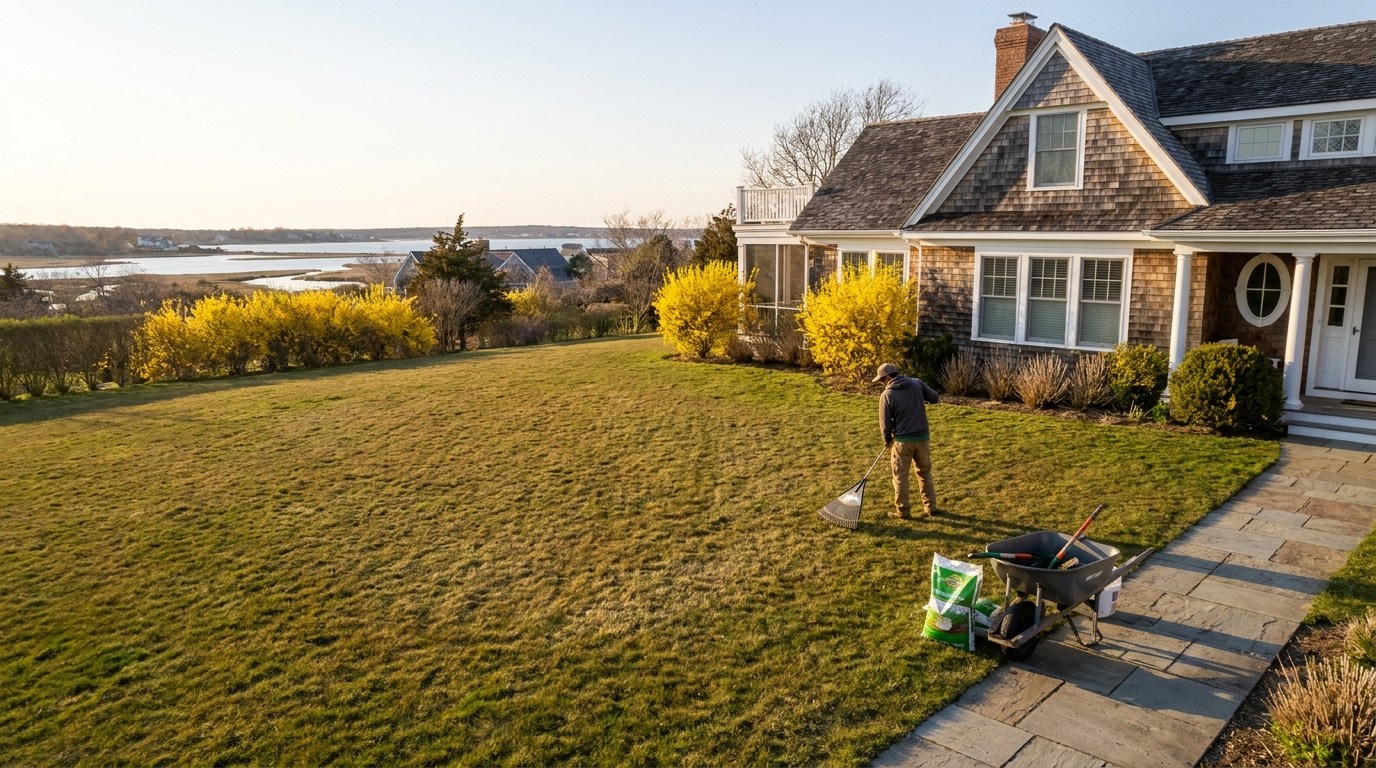
Most spring lawn guides tell you to "start when the weather warms up." That advice is almost useless on the South Shore of Long Island, where the difference between acting on the right week and the wrong one can mean a lawn full of crabgrass, wasted fertilizer, and a fine from Suffolk County. The timing rules here are stricter, the soil behaves differently than anywhere else in the Northeast, and the coastal climate adds variables that generic guides never account for. This step-by-step guide is built specifically for East Islip and the surrounding South Shore communities, drawing on the kind of ground-level knowledge that only comes from working these properties for decades.
Understanding Your South Shore Soil Before You Touch the Lawn
Before any tool hits the ground, it pays to understand what is actually under your feet. South Shore Long Island lawns sit on glacial outwash plain soils, which means the dominant texture is sandy loam. That has real consequences for how you manage spring startup, and it is the first thing that separates local expertise from generic advice.
Why sandy soil changes everything: The soil here is sandy and porous, a legacy of glacial deposits, which means nutrients leach out faster, grass dries out quicker, and what works in the Midwest will not cut it here. In practical terms, this means fertilizer applied at the wrong time does not just sit harmlessly until conditions improve. It washes through the profile and into the groundwater. Long Island sits over a sole-source aquifer, meaning drinking water comes entirely from groundwater, and fertilizers contribute roughly 50% of nitrogen loads to the Peconic Estuary.
Step 1: Pull a soil test. Do this in late March before any other spring work begins. Sandy South Shore soils tend to be slightly acidic, with pH ranging from 5.5 to 6.5, while most lawn grasses prefer a pH of 6.0 to 7.0. A test from your local Cornell Cooperative Extension office will tell you exactly where your soil stands and whether lime is needed to correct acidity before the growing season begins. Without testing, you might be growing grass in soil that is too acidic to absorb the nutrients you are applying, regardless of how much you put down. Order your test through the Cornell Cooperative Extension of Suffolk County, which offers soil testing services tailored to Long Island conditions.
Know your grass type. For most Long Island lawns in USDA Zone 7B, the best grass types are a blend of Kentucky Bluegrass (60 to 70%), Perennial Ryegrass (15 to 20%), and Fine Fescue (15 to 20%), giving you Kentucky bluegrass's self-repairing density, ryegrass's fast germination, and fine fescue's shade tolerance.
For lower-maintenance yards or sandy soils that drain fast, Turf-Type Tall Fescue is an excellent standalone choice that handles drought, shade, and Long Island’s sandy outwash soils better than any other species. Knowing which grass dominates your lawn determines your mowing height, your seeding decisions, and how aggressively you need to irrigate through summer.
| Grass Type | Sandy Soil Performance | Spring Mow Height | Ideal Soil pH | Best For |
|---|---|---|---|---|
| Kentucky Bluegrass blend | ⚠️ Moderate (needs irrigation) | 2.5–3.0 in. | 6.0–7.0 | High-maintenance, irrigated lawns |
| Turf-Type Tall Fescue | ✅ Excellent (deep roots) | 3.0–3.5 in. | 5.5–6.5 | Low-maintenance, drought-prone yards |
| Perennial Ryegrass | ✅ Good (well-drained sites) | 2.0–3.0 in. | 6.0–7.0 | High-traffic family yards |
| Fine Fescue | ✅ Excellent (dry, shady) | 2.5–4.0 in. | 6.0–6.5 | Shaded or coastal-exposed areas |
Spring Cleanup: What to Do in March and Early April
Spring cleanup on the South Shore is not simply raking leaves and calling it done. It is a diagnostic pass across the property, and the decisions you make during it set the trajectory for the entire growing season. The goal is to open the lawn to light and airflow without causing damage to turf that is still waking up from dormancy.
Step 2: Walk the property and assess winter damage. Spring lawn care on Long Island begins in mid-March with cleanup and soil temperature monitoring, as cool-season grass breaks dormancy around March 15 when soil at the 4-inch depth warms above 40°F. During your walkthrough, flag areas of matted turf (a sign of snow mold), bare patches left by salt damage near driveways and curbs, and any spots where standing water pooled over winter. These areas need targeted attention, not a blanket approach.
Step 3: Rake lightly, not aggressively. A light raking with a leaf rake removes winter debris, matted leaves, and dead grass blades that block sunlight from reaching the crown of the plant. The key word is light. Rake when the soil is firm to avoid soil compaction and prevent damage to healthy grass. If you sink into the lawn when you walk on it, the ground is still too saturated. Wait another week. Aggressive power raking or dethatching in spring on a South Shore lawn is rarely necessary and can do more harm than good, particularly if you plan to apply a pre-emergent herbicide, which needs an undisturbed soil surface to form its protective barrier.
Step 4: Apply lime if your soil test calls for it. Lime is one of the few soil amendments you can apply before April 1 without running into Suffolk County's fertilizer restrictions, because it does not contain nitrogen or phosphorus. If your soil test revealed a pH below 6.0, a pelletized lime application in late March gives it time to begin working before the growing season ramps up. Work it in lightly if the ground allows, or simply broadcast it and let rain do the job. Expect pH correction to take several weeks to show measurable change.
Step 5: Inspect irrigation systems. South Shore homeowners with in-ground irrigation should run a full system check in late March before the lawn needs water. Look for heads damaged by frost heave or winter plowing, check for leaks at zone valves, and confirm that controller programming matches spring watering needs (which are far lower than summer demands). Getting irrigation right early prevents the overwatering that encourages fungal disease in Long Island's humid coastal climate.
The Fertilizer and Pre-Emergent Window: Getting the Timing Right
This is where most Long Island homeowners get tripped up, and where the consequences of acting on the wrong date are most visible. There are two separate timing constraints at play: the legal window set by Suffolk County law, and the biological window set by soil temperature. They are not the same date.
Know the law first. Suffolk County passed Local Law 41-2007, which prohibits lawn fertilizer applications, synthetic or organic, from November 1 through April 1. It was the first law of its kind in New York State, and it exists because nitrogen runoff from lawns feeds algae blooms in the Great South Bay and threatens the shellfish populations that Long Island's coastal ecosystem depends on.
Violations carry fines up to $1,000. Mark April 1 on your calendar as the earliest legal date, not the target date.
Step 6: Apply pre-emergent herbicide around the April 1 window. Crabgrass is the primary target. Crabgrass seeds germinate when soil temperatures reach about 55°F, which usually happens in early to mid-April on Long Island. Applying pre-emergent before that point prevents seeds from germinating.
Based on 30-year NOAA climate data for Suffolk County, soil temperatures at the 4-inch depth reach 50°F around April 4, and the pre-emergent barrier needs to be in place before soil hits 55°F, which historically occurs around April 21. Products containing prodiamine or dithiopyr are the most common choices for Long Island lawns. Apply evenly and water in with at least a quarter-inch of rain or irrigation. Important: After pre-emergent is down, avoid disturbing the soil for several weeks. That means no aeration, no heavy raking, and no overseeding until fall.
Step 7: Time your first fertilizer application to soil temperature, not the calendar. Cool-season grasses need soil temperatures around 55°F before they can actively absorb nutrients. On Long Island, that typically happens mid-April, though coastal areas may warm slightly faster than inland properties.
The simplest timing check is this: wait until you have mowed twice. That tells you the grass is actively growing and ready to use what you give it. For a spring application, keep nitrogen rates modest. Keep spring applications light, your grass is building roots, not trying to win a growth competition. A slow-release formula prevents the surge growth that stresses turf and increases mowing frequency without building the root depth your lawn needs for summer resilience.
Pro tip: Because Long Island's sandy soils leach nutrients faster than denser soils elsewhere, split your spring nitrogen into two lighter applications rather than one heavy feeding. The first goes down at the soil temperature trigger in mid-April; the second follows four to six weeks later in late May. This approach keeps nutrients in the root zone longer and reduces runoff risk, which matters both for your lawn's performance and for compliance with the spirit of Suffolk County's water quality regulations.
First Mowing, Ongoing Care, and Setting Up for Summer
The first mow of the season is not just a maintenance task. It is a signal that your lawn has transitioned from dormancy to active growth, and the decisions you make during these early weeks establish the density and stress tolerance of the turf heading into summer.
Step 8: Set your mower height correctly from the first cut. A common mistake is cutting too short in spring with the idea that it will "wake the lawn up." The opposite is true. Mowing too low in spring removes leaf tissue the plant needs for photosynthesis, weakens root development, and opens the canopy to weed pressure. For a typical South Shore lawn with a Kentucky bluegrass or fescue blend, set your mowing height at 3.0 to 3.5 inches for spring cuts. Never remove more than one-third of the blade height in a single pass. If the lawn grew tall over a wet week, raise the deck and take it down in two cuts spaced a few days apart rather than scalping it in one pass.
Step 9: Address bare spots strategically. If you have bare areas from winter salt damage, animal traffic, or disease, resist the urge to seed them in spring if you applied a pre-emergent. Pre-emergent herbicides prevent crabgrass and other annual weeds as soil warms past 55°F, but you should not apply them if you plan to seed within 8 to 12 weeks. You face a genuine trade-off: crabgrass prevention or spring seeding, but not both at the same time. You will need to choose between crabgrass prevention and spring overseeding because you cannot do both effectively. For most South Shore properties, the better approach is to apply pre-emergent across the full lawn, mark bare areas, and plan a proper aeration and overseeding program for early fall when conditions are far more favorable for new grass establishment.
Step 10: Set a watering baseline. Spring rainfall on Long Island is generally adequate for established cool-season lawns, but newly germinating areas or recently fertilized turf benefit from supplemental irrigation if dry periods stretch beyond 10 days. Water deeply and infrequently rather than lightly every day. Deep watering encourages roots to follow moisture downward through the sandy profile, building drought tolerance before summer. Shallow daily watering keeps roots near the surface, where they are most vulnerable to heat stress in July and August.
Looking ahead to fall: The optimal window for aeration and overseeding on Long Island is early September through mid-October. That is when soil temperatures are still warm enough for germination, typically above 55°F, but air temperatures have cooled enough that new seedlings are not immediately stressed by summer heat. Cool-season grasses are in their most active growth phase during this window, which means faster establishment and stronger root development before winter. Flag the bare spots you identified during spring cleanup and plan to address them properly in September, not April.
Frequently Asked Questions About Spring Lawn Startup on Long Island
When can I legally start fertilizing my lawn in Suffolk County?
Suffolk County Local Law 41-2007 prohibits lawn fertilizer applications, synthetic or organic, from November 1 through April 1. April 1 is the earliest legal date, but the biologically correct time to apply is typically mid-April, once soil temperatures reach 55°F and you have mowed the lawn at least twice.
Should I aerate my lawn in spring or fall?
Spring aeration is possible for severely compacted lawns that cannot wait, but it comes with trade-offs. Disturbing dormant weed seeds in spring can mean a bigger weed problem by summer, and spring aeration timing conflicts with pre-emergent herbicide applications. Fall is the better option for almost every Suffolk County lawn.
Can I overseed bare spots in spring?
Only if you skip the pre-emergent herbicide in those areas. The sweet spot for planting spring grass seed on Long Island is typically mid-to-late April to early May, which ensures that the soil is warm enough for germination while avoiding late frosts and weed takeover. However, most lawn care professionals on the South Shore recommend waiting until fall for overseeding, when conditions produce significantly better results.
How do I know if my soil pH needs lime?
A soil test is the only reliable answer. Sandy South Shore soils tend to be slightly acidic, with pH ranging from 5.5 to 6.5. If your test shows pH below 6.0, a pelletized lime application in late March or early April will help bring it into the range where grass can efficiently absorb nutrients from fertilizer. Lime can be applied even during the fertilizer blackout period because it contains no nitrogen or phosphorus.
What is the first thing I should do for my lawn in spring?
Walk the property and take inventory before doing anything else. Identify bare spots, salt-damaged edges, matted areas, and drainage problems. Then pull a soil test if you have not done one recently. Every subsequent decision, from whether to lime to how aggressively to fertilize, flows from what you observe on the ground and what the soil test tells you. Acting without that information is the most common and most costly mistake South Shore homeowners make each spring.
Key Takeaways for South Shore Spring Lawn Preparation
- Soil temperature drives timing, not the calendar. On Long Island, soil temperatures typically reach 55°F by mid-April. That is the real start date for spring fertilization, regardless of when the legal blackout period ends.
- Suffolk County's fertilizer ban ends April 1, not begins. Suffolk County's Local Law 41-2007 extends the fertilizer ban to November 1 through April 1, with fines up to $1,000 per violation. Plan your spring schedule around this date as a floor, not a target.
- Sandy South Shore soils require split fertilizer applications. One heavy spring feeding leaches through the profile before roots can use it. Two lighter, timed applications keep nutrients where the grass needs them.
- Pre-emergent and overseeding cannot coexist in spring. Choose one. For most South Shore lawns, pre-emergent wins in spring and overseeding waits for fall's superior conditions.
- Soil testing is the starting point, not an optional extra. Without testing, you might be growing grass in soil too acidic to absorb the nutrients you are applying, regardless of how much you put down.
- Flag problems now, fix them properly in fall. Fall is the stronger window for aeration because the soil is still warm from summer, grass is actively growing again after the heat stress of July and August, and there is enough time before winter dormancy for new root development to take hold.
Spring lawn preparation on the South Shore is less about doing more and more about doing the right things in the right order. Families across East Islip and the surrounding communities who follow this sequence consistently see stronger green-up, fewer weed problems through summer, and lawns that hold up through the heat without constant intervention. When the process feels complicated or the timing windows feel tight, working with a locally experienced team that knows these soils and these regulations is the most efficient path to a lawn that performs all season long.
Sources
- Lawn Fertilization Services in Suffolk County, NY
- Sandy vs. Clay Soil on Long Island: What Homeowners Need to Know
- Long Island Lawn Soil: Why Suffolk County Is Different
- Best Cool-Season Grass Types for Long Island
- Long Island Lawn Care Calendar 2026
- Revitalize Your Lawn: Spring Lawn Care Tips for Long Island
- Spring Lawn Care on Long Island: Month-by-Month Timeline
- Spring vs. Fall Lawn Care: What Matters Most for Long Island