Most homeowners think of landscaping as the last item on the renovation checklist, something to tidy up after the kitchen remodel and the new roof. That instinct is costing South Shore Long Island homeowners real money. In a market where buyers form opinions before they step out of the car, the outdoor environment is not decoration, it is a financial asset. Research from Virginia Tech found that high-quality landscaping can increase perceived home value by 5.5–12.7% compared to a home with no landscaping at all. On Long Island, where median home prices run well above the national average, that percentage translates to a significant dollar figure at closing.
What follows is a ranked list of eight landscaping upgrades that consistently move the needle for South Shore properties, ordered by real-world impact. Each one is evaluated through the lens of landscaping ROI on Long Island, curb appeal, and long-term livability. The ranking reflects both resale value recovery and how buyers in competitive South Shore neighborhoods actually respond to what they see from the street.
1. Consistent Lawn Care and Maintenance: The Highest-ROI Investment Nobody Takes Seriously Enough
Before spending a dollar on any structural upgrade, the lawn itself has to be right. This is the single most impactful investment a homeowner can make, and it is consistently underestimated.
Routine lawn care, regular mowing, edging, fertilizing, and seasonal cleanup, returns approximately 217% ROI at resale according to the NAR's Remodeling Impact Report. That figure is not a typo. No kitchen renovation, no bathroom remodel, and no hardscaping project comes close to that return ratio. The reason is simple: a thick, green, weed-free lawn signals to buyers that a property has been cared for consistently. It communicates discipline. Overgrown edges, patchy turf, and crabgrass do the opposite, they raise questions about what else has been neglected.
On the South Shore, lawn care is complicated by the region's sandy glacial outwash soils. Sandy soils on Long Island's South Shore drain water and nutrients quickly, creating the paradoxical situation of lawns that need frequent irrigation yet stay dry for days after rainfall. This means standard fertilization schedules designed for inland properties often underperform here. Timing matters. Soil amendments matter. Choosing the right grass variety for coastal conditions matters.
The practical approach: commit to a seasonal maintenance program that includes spring and fall cleanups, regular fertilization calibrated to South Shore soil pH, and consistent edging along all beds and hardscape lines. A sharp edge along a walkway or driveway does more visual work than most homeowners realize. The single highest-ROI landscaping investment is a well-maintained lawn with defined beds and fresh mulch. Get this right first, then layer in the upgrades below.
| Upgrade | Typical ROI (NAR) | South Shore Relevance | Long Island Complexity |
|---|---|---|---|
| Lawn Maintenance | 217% | ✅ Very High | ⚠️ Sandy soil requires calibrated care |
| Overall Landscape Upgrade | 100% | ✅ High | ⚠️ Plant selection is critical |
| Paver Patio | 95% | ✅ Very High | ✅ Straightforward install |
| Tree Care | 87% | ✅ High | ⚠️ Species selection matters for salt/wind |
| Irrigation System | 83% | ✅ Very High | ⚠️ Fast-draining soil increases need |
| Outdoor Lighting | 59% | ✅ High (listing photography) | ✅ Low complexity |
2. A Paver Patio or Hardscaped Outdoor Living Area
A well-designed paver patio is the upgrade that converts a backyard into a selling point. Buyers in South Shore communities are not just buying square footage inside the house, they are buying the lifestyle the property enables. A defined outdoor entertaining space makes that lifestyle tangible and immediate.
Installing a patio expands and enhances outside living area while increasing home value. According to NAR and NALP, an 18-foot by 16-foot concrete paver patio costs about $10,500 and you'll recoup 95% of the cost, making it a worthwhile investment for both current enjoyment and resale. For East Islip and South Shore properties, where outdoor living season runs from late April through October, that usable space carries real weight in buyer negotiations.
The material choice matters more than most homeowners appreciate. Concrete pavers hold up well against Long Island's freeze-thaw cycles. Natural bluestone and tumbled travertine offer a premium aesthetic that photographs exceptionally well for online listings. Avoid poured concrete slabs without control joints, they crack under the thermal stress of Long Island winters and immediately signal deferred maintenance to buyers.
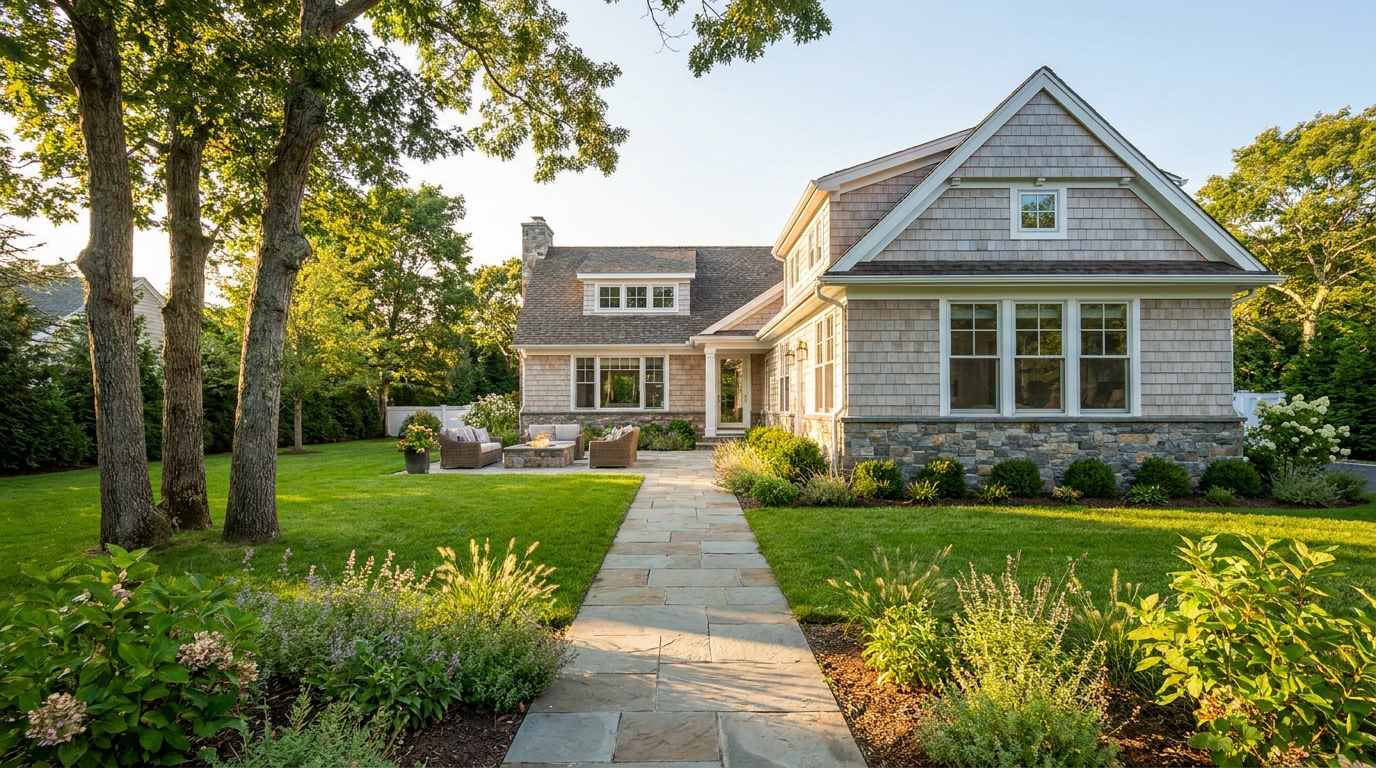
Thoughtfully integrated hardscaping can transform how a home looks from the street. Attractive stone pathways guiding visitors to the door or a well-designed patio visible from the driveway create a sense of intentional design that elevates the entire property. Pair the patio with a defined planting border and low-voltage lighting, and the combination becomes far greater than the sum of its parts. This is a Long Island outdoor upgrade that works on two levels simultaneously: it improves daily life while the homeowner is living there, and it commands attention during showings.
3. Strategic Tree Planting and Mature Tree Preservation
Trees are the only landscaping investment that appreciates over time on its own. Every other upgrade depreciates or requires replacement. A well-placed, healthy tree becomes more valuable with each passing season, which is why tree decisions deserve far more strategic thought than they typically receive.
Mature shade trees are consistently identified by appraisers and landscape economists as among the most value-additive landscaping features a property can have. The challenge on Long Island's South Shore is that not all trees perform equally here. Suffolk County's sandy glacial soil, salt air off the Great South Bay or Long Island Sound, and relentless deer pressure make this a harder environment than it looks.
Species selection is where most homeowners make costly mistakes. Non-native ornamentals that look beautiful at the nursery often struggle in South Shore conditions, requiring constant supplemental care just to survive. Bayberry's semi-evergreen gray-green foliage and clusters of waxy gray berries are quintessentially Long Island. It thrives in the sandy soils of the South Shore, tolerates salt spray, and fixes nitrogen, actually improving the soil around it. Other strong performers for South Shore properties include Black Tupelo, which handles the sandy, occasionally waterlogged soils found on many South Shore properties without complaint.
For existing mature trees, professional maintenance is a direct investment in appraised value. Tree upkeep delivers 87% ROI, and according to the University of Washington, large trees can increase a home's value by up to 15%. Proper pruning, disease management, and crown cleaning protect that asset. A dead or structurally compromised tree, by contrast, is a liability that buyers will use to negotiate price down.
4. Native and Climate-Adapted Planting Beds
The common approach to planting beds on Long Island is to pick whatever looks good at the garden center in spring, install it, and hope for the best. What actually works is selecting plants specifically adapted to South Shore soil and salt-air conditions, and that distinction has a measurable impact on both curb appeal and long-term maintenance costs.
Soil type is the starting point for every landscaping decision on Long Island, plant selection, irrigation scheduling, fertilizer timing, and mulching strategy all change based on whether you're working with South Shore sand or North Shore clay. In East Islip and surrounding communities, the sandy, fast-draining outwash soils mean that conventional planting approaches often result in plants that look stressed by midsummer and dead by the following spring.
Native plants sidestep this problem entirely. Salt-tolerant native plants like seaside goldenrod, bayberry, beach plum, and switchgrass shrug off salt spray and hold their color all season, while conventional ornamentals brown and fail.
Native plants that evolved with Long Island’s sandy outwash plain soils include Beach Plum, Inkberry, American Holly, Bayberry, Little Bluestem grass, and switchgrass. These plants are drought-tolerant once established and virtually maintenance-free.
From a property value standpoint, well-maintained planting beds with fresh mulch are among the highest-visibility, lowest-cost improvements available. The key word is "maintained." Beds that are overgrown, mulch-depleted, or full of stressed plants actively hurt curb appeal. A Clemson University study found that homes with "excellent" landscaping sold for 6–7% more than equivalent homes with "good" landscaping, and 10–12% more than homes with "average" landscaping. The difference between those categories often comes down to the health and presentation of planting beds.
5. An Automated Irrigation System
An in-ground irrigation system is one of those upgrades that buyers in South Shore communities have come to expect, and its absence is noticed. It is both a practical tool and a signal: a property with a properly zoned, automated system communicates that the lawn and plantings have been watered correctly and consistently, which reduces buyer anxiety about what they are inheriting.
According to the National Association of Realtors' 2023 Remodeling Impact Report, an automated irrigation system returns 83% ROI. On Long Island's South Shore, the case for irrigation is even stronger than the national data suggests. The sandy, fast-draining soil profile means that without consistent, calibrated watering, lawns and plantings deteriorate quickly during dry stretches, and dry stretches are a regular feature of Long Island summers.
A properly designed system is zoned by plant type and sun exposure, runs on a smart controller that adjusts for rainfall and evapotranspiration rates, and includes drip emitters for planting beds to reduce fungal disease. These are not luxury features, they are the difference between a system that works and one that wastes water while still leaving dry spots. For homeowners preparing to list, a functioning, well-maintained irrigation system is a concrete, verifiable feature that appraisers and buyers both recognize. It also reduces ongoing maintenance costs, which is a secondary value that compounds over the years of ownership before any sale.
6. Outdoor Lighting, Defined Walkways, and Seasonal Color: Three Upgrades That Work Together
These three improvements are grouped together because their combined impact exceeds what any one of them delivers alone, and because the investment required for all three together is modest relative to the visual transformation they produce.
Outdoor lighting is the most underrated upgrade on this list. Outdoor lighting plays an outsized role in nighttime showings and listing photography. In today's real estate market, most buyers first encounter a property through online photos taken at dusk or after dark. Low-voltage path lighting, uplighting on specimen trees, and accent lighting on architectural features transform a property's nighttime presence entirely. The NAR reports that most realtors (92%) suggest that sellers improve the curb appeal of their home before listing it for sale, and lighting is one of the fastest ways to make that improvement visible at any hour.
Walkway upgrades address one of the most overlooked curb appeal factors on South Shore properties. A cracked, heaved, or stained concrete walkway leading to the front door undermines everything else done to the property. Replacing it with pavers, bluestone, or well-laid stepping stones with planted borders creates a welcoming arrival sequence that buyers remember. Front walkway upgrades return close to 100% according to NAR data, making this one of the most efficient investments available.
Seasonal color, rotating annuals in beds near the entry, flowering shrubs timed to bloom during peak showing season, is the finishing layer. It signals active care and creates the emotional warmth that makes buyers want to linger. Homes with strong curb appeal tend to attract more attention in the market, enhancing their chances of a quick sale, and this is especially important in a competitive area like Long Island.
Frequently Asked Questions About Landscaping Property Value on Long Island
How much can landscaping increase my home's value on Long Island?
Studies show that well-executed landscaping can boost a home's sale price by 5–15%. On Long Island, where home values run significantly above national averages, that percentage represents a substantial dollar return. The actual figure depends on the quality and consistency of the work, not just the type of project.
What landscaping upgrades have the best ROI for South Shore homeowners?
Per the 2023 NAR Remodeling Impact Report: Outdoor Features, the top performers are standard lawn care service at 217%, landscape maintenance at 104%, overall landscape upgrade at 100%, new patio at 95%, tree care at 87%, and irrigation at 83%. For South Shore Long Island properties specifically, irrigation and native plantings carry additional weight because of the region's sandy soil conditions.
Does the type of plants matter for Long Island home value?
Yes, significantly. A study by the Virginia Tech Department of Horticulture found that plant size and design sophistication were the two factors that contributed most to a home's value. On the South Shore, plants that fail due to salt air, sandy soil, or deer pressure actively reduce curb appeal. Choosing species adapted to local conditions is essential for maintaining the investment.
Should I hire a local landscaper or a large national company for these upgrades?
Local expertise matters more on Long Island than in most markets. Choosing native trees for landscaping in Suffolk County isn't as simple as picking what looks good at the nursery. Long Island's glacial soil, coastal conditions, and active pest threats make species selection genuinely consequential, and getting it wrong is expensive. A company with decades of experience in the specific South Shore environment will make different, and better, recommendations than a national franchise applying generic protocols.
Is curb appeal really that important in the Long Island real estate market?
One analysis of Google Street View photos and sales data found that homes with excellent curb appeal sold for an average of 7% more than similar homes with poor curb appeal. In slower markets, when buyers have more room to be selective, that premium rose as high as 14%.
This is especially important in a competitive area like Long Island, where inventory moves quickly and first impressions are formed at the curb.
What Long Island Homeowners Should Do First
The upgrades ranked above are not equally accessible to every budget, but the sequencing matters as much as the selection. Start with lawn care and planting bed maintenance, these deliver the highest return per dollar and create the foundation that makes every other upgrade look better. Add native, climate-adapted plantings to replace anything that is struggling in South Shore conditions. Layer in a paver patio or walkway upgrade when the budget allows. Then build toward irrigation, trees, and lighting as longer-term investments.
The homeowners who see the strongest landscaping ROI on Long Island are not necessarily the ones who spend the most. They are the ones who invest consistently, choose the right plants and materials for the local environment, and maintain what they have built. Landscaping pays you back twice: once while you're living in the home, and again when you sell. On the South Shore, where home value landscaping is a genuine competitive advantage in a tight market, that double return is worth taking seriously.
For homeowners in East Islip and surrounding South Shore communities, working with a landscaping company that has spent decades learning this specific environment, its soil profiles, its seasonal rhythms, its plant palette, is the most reliable way to ensure that every dollar invested in the landscape returns more than it cost. The upgrades above are proven. The execution is what separates a property that commands a premium from one that merely keeps pace with the market.
Key Takeaways
- Lawn maintenance delivers the highest ROI of any landscaping investment, roughly 217% at resale, and it is the foundation that makes every other upgrade perform better.
- Paver patios and hardscaped outdoor living areas recover approximately 95% of their cost and create the tangible lifestyle appeal that drives buyer decisions on the South Shore.
- Tree selection on Long Island requires local knowledge. Native species like Bayberry, Black Tupelo, and Eastern Red Cedar are built for the region's sandy soil, salt air, and deer pressure. Non-native ornamentals often fail within a few seasons.
- South Shore soil conditions demand a different approach. Sandy, fast-draining outwash soils require calibrated fertilization, irrigation, and plant choices that generic landscaping programs do not account for.
- Outdoor lighting, walkway upgrades, and seasonal color work as a system. Each one amplifies the others, and together they produce a curb appeal transformation that exceeds the cost of any single element.
- Consistency beats intensity. A property maintained well over time outperforms one that receives a single large investment just before listing. The Long Island real estate market rewards discipline.
- For authoritative guidance on outdoor feature ROI benchmarks, the NAR's Remodeling Impact Report is the most credible national source available.
- Homeowners selecting plants for South Shore properties can reference native plant guides specific to Long Island conditions to avoid costly species mismatches.
Sources
- Does Landscaping Increase Home Value? ROI Data and What to Plant
- Sandy vs. Clay Soil on Long Island: What Homeowners Need to Know
- Does Landscaping Add to Home Value? What the Data Shows
- 13 Outdoor Upgrades That Make Your Home More Valuable
- Long Island Hardscaping: Sculpting Beauty & Boosting Your Home's Worth!
- Best Native Trees for Suffolk County Landscaping
- Best Native Trees for Long Island Backyards
- Lawn and Landscape Items that Increase Home Value